

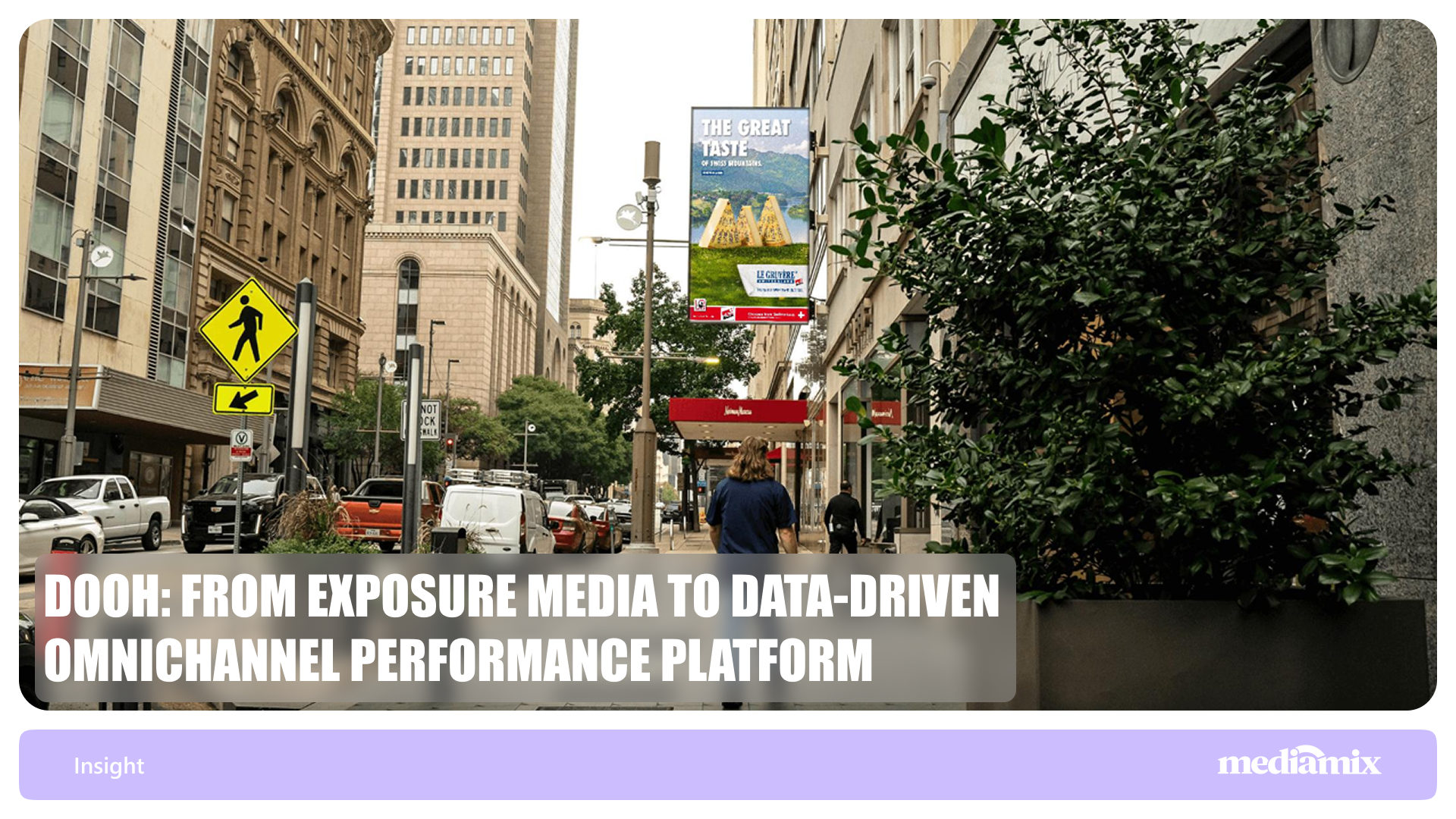
DOOH: From Exposure Media to Data-Driven Omnichannel Performance Platform
From Visibility to Business Performance
In just a few years, Out-Of-Home (OOH) has been transformed. What was historically a mass exposure medium has become, through Digital Out-Of-Home (DOOH) and later Programmatic Digital Out-Of-Home (PDOOH), a programmable, measurable, and connected media platform. The latter acts as a strategic entry point at the top and middle of the funnel, connected to other digital levers. It does not drive the entire consumer journey alone but feeds omnichannel ecosystems (paid media, social, CRM, retail media) through exposure and retargeting logic.
Today, DOOH is no longer considered in isolation. It is part of a global technological ecosystem where data, artificial intelligence, programmatic, creativity, and retail media converge.
At Mediamix, DOOH is designed as an integrated strategic lever at the intersection of data, programmatic, and premium content to ensure efficiency, brand safety, and measurable performance.
OOOH, DOOH, PDOOH: clarifying the definitions
- OOH (Out-Of-Home): Static physical signage, purchased via direct sales, aimed at mass and continuous exposure in high-traffic locations. Budgets are generally high and inflexible due to printing, production, and space rental costs. Ideal for awareness and brand image, but difficult to optimize mid-campaign and poorly measurable.
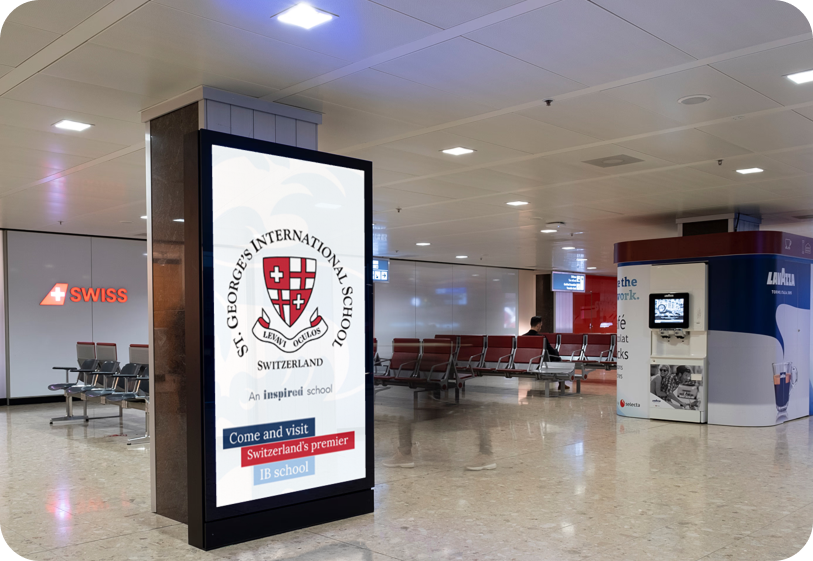
- DOOH (Digital Out-Of-Home): Digital evolution of OOH based on digital screens broadcasting static or dynamic and contextualized content. Budgets are more accessible than traditional OOH, with better broadcast flexibility (formats, days, schedules, locations). DOOH promotes high levels of attention and memorization, while often maintaining a planned and semi-static logic.
- PDOOH (Programmatic Digital Out-Of-Home): DOOH activated programmatically, with modeled impression-based buying, automation, and data-driven management. Budgets become progressive, optimizable, and scalable, comparable to digital logic, allowing to start at controlled levels and increase according to performance. PDOOH optimizes the efficiency of each franc/euro invested through the activation of triggers, real-time optimization, and its omnichannel integration, but involves more indirect control of individual screens and the exact frequency per screen, according to programmatic inventory rules. PDOOH is particularly relevant for drive-to-store, omnichannel amplification, and contextualized awareness. However, it does not constitute a pure CPA performance lever, comparable to paid media platforms like Google or Meta, but acts as an accelerator of the high and middle funnel.
A global market in exponential growth
According to recent Statista data (2025), DOOH now represents more than 50% of global Out-Of-Home revenue. Its growth is double that of traditional OOH, driven by the digitalization of inventories and programmatic adoption. By 2027, DOOH could reach up to 75% of the OOH mix in several key European markets (UK, Scandinavia, Germany).
Sustained revenue growth
In 2024, the global DOOH market generated more than 30 billion USD in advertising revenue. After post-pandemic resilience, DOOH shows an average annual growth of over 15%, supported by urbanization, the rise of digital screens, and advertiser demand for measurable environments. These figures confirm that DOOH is no longer a marginal segment: it is becoming the dominant category of billboard advertising.
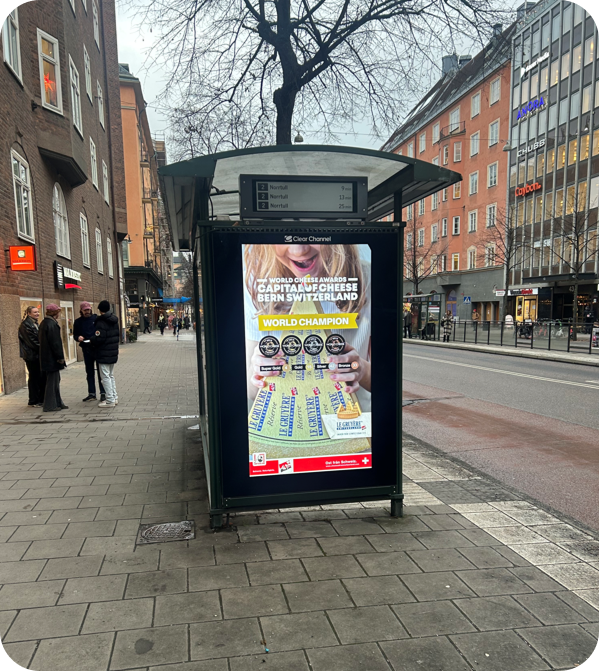
The progression of DOOH is based on several structural factors:
- Massive digitalization of OOH inventories: Digital panels are gradually replacing static panels.
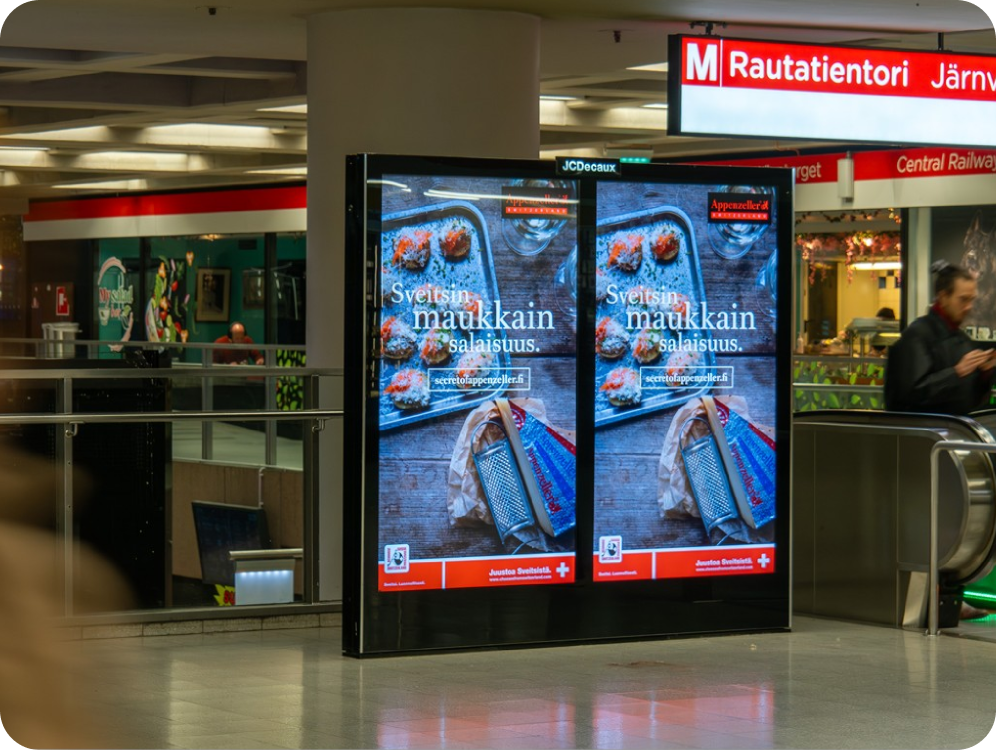
- Programmatic opening of inventories: Major networks (JCDecaux, Clear Channel, Ströer…) are opening their screens to automated and data-driven purchasing.
- Rise of specialized DOOH DSPs/SSPs: Advanced optimization, real-time bidding, integration of contextual triggers.
- Integration of contextual & transactional data: Personalization at the micro-geographic and situational level.
It is not just a question of more screens; it is a revolution in media usage.
The real change: data, AI, and contextual triggers
The strength of modern DOOH lies in its ability to be activated in real-time, according to precise contextual conditions:
Activatable triggers:
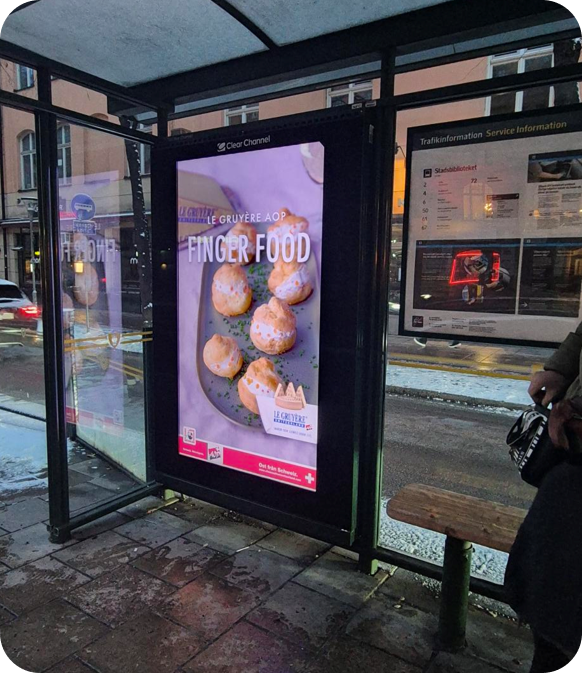
- Weather: rain, snow, heat, black ice
- Temporality: hour, day, periods of high traffic
- Location: proximity to a point of sale, specific urban area
- Economic or mobility events: fuel prices, price variations…
Example : Broadcasting a message only when the temperature drops below 0°C within a 2 km radius of a specialized store. Each CHF or EUR invested is activated only when the context is relevant, thus considerably reducing media waste. DOOH expertise no longer resides only in the choice of screens but in the ability to activate the right message, at the right time, in the right context.
DOOH everywhere: the emergence of unprecedented touchpoints
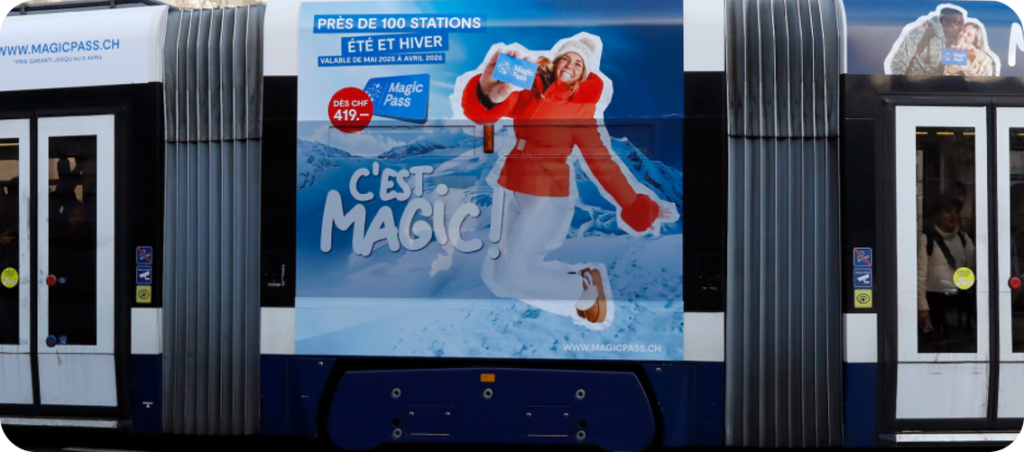
DOOH is no longer limited to major arteries or public transport.
With the rise of digital screens, touchpoints have exploded in consumers' daily lives:
- city centers and public spaces,
- stations, subways, airports,
- shopping malls,
- points of sale (entrances, aisles, checkouts),
- gas stations,
- taxis and mobility fleets,
- elevators and residential building halls,
- airport lounges and business centers,
- stadiums and events,
- and now… connected cars.
Advertising in connected cars: the next contextual media
First of all, it is necessary to distinguish In-Car Advertising / In-Car Marketing when the communication targets the driver via the onboard interface and DOOH when the screen is visible outside the vehicle or intended for passengers in a framework comparable to signage.
Connected vehicles generate powerful contextual data: journeys, schedules, weather, fuel level, travel habits. Several major car manufacturers have already paved the way: GM (OnStar), Hyundai-Kia, Toyota, Volkswagen Group, Mercedes-Benz, and BMW are gradually integrating services and contextual recommendations into their onboard interfaces. The connected car thus becomes a new "soft advertising" media space, based on location, journey, and usage, prefiguring a data-driven mobile DOOH.
Examples of activation:
- Mountain road → advertisement for snow chains
- End of the day → restaurant suggestion on the route
- Low fuel level → partner gas station announcement
This mobile DOOH territory opens up unprecedented perspectives, at the crossroads of mobility, data, and user experience, with key challenges of privacy and consent.
DOOH & Retail Media: activating consumption at the point of sale
One of the structural developments of DOOH is its convergence with Retail Media. In retail environments, DOOH screens can be activated from distributors' first-party data, notably through loyalty cards, purchase history, and e-commerce behavior. Example of possible advanced targeting: hard vs. soft cheese buyers, regular vs. occasional consumers, buyers of competing brands, profiles sensitive to promotions or premium upgrades. Retail DOOH allows targeting real buyers at the moment of decision, in a brand safe and contextual environment.
Retail DOOH can be connected to distributors' e-commerce platforms, mobile applications, and even programmatic, social, or connected TV activations. This allows for post-exposure retargeting, measurement of the real impact on sales, and analysis of uplift, purchase frequency, and repeat purchase. DOOH becomes a business performance lever by measuring many indicators (exposure, uplift, drive-to-store, retargeting), and not just a visibility media.
DOOH, retargeting and omnichannelity
Thanks to technological specialists in data activation, it is possible to identify DOOH exposure zones, build offline exposed audiences, and retarget them on other channels (social media, programmatic display & video, connected TV). DOOH acts as the entry point of the consumer journey, connected to all media levers.
Augmented creativity: 3D Billboard & FOOH
3D formats place the viewer at the heart of the visual experience thanks to spectacular depth effects. They significantly increase message memorization and generate organic amplification on social networks.
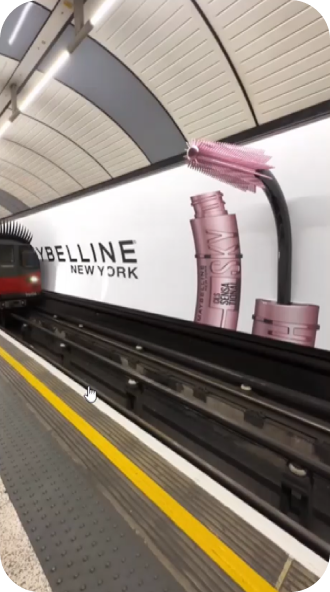
FOOH (Fake Out-Of-Home): FOOH uses hyper-realistic videos simulating DOOH activations in iconic urban environments. Objective: create surprise, emotion, and engagement, extending the impact beyond simple physical signage.
These formats show that DOOH is no longer just an exposure media but a narrative and experiential media.
Impact, memorization and brand safety
DOOH combines: high memorization rates, native brand safety (known, selected, controlled screens) with measurable activation via QR codes, drive-to-store, lead generation, and lift studies.
Concrete cases – Mediamix
- Scandinavia (2025): DOOH campaigns at points of sale and above checkouts to boost sales during the holidays.
- New York: campaigns in taxis and around POS during major events.
- Germany: DOOH contest with QR code → CTR up to 40% in SEA, an exceptional result.
- Business Schools & banks: generation of qualified leads via airport lounges and business centers.
- Multi-DSP approach: selection of platforms according to country, screens, and local uses, guaranteeing relevance and coverage.
Our approach
At Mediamix, DOOH is: data-driven, activatable in programmatic (PDOOH) via different DSPs, connected to retail media, integrated into the omnichannel mix, oriented towards quality, safety, and performance.
Would you like to activate DOOH as a true performance lever? Contact our experts to structure a DOOH, Retail Media, and omnichannel strategy adapted to your challenges.